
The Psychology Behind High Converting Websites

The Psychology Behind High Converting Websites

‹ The Anatomy of a High Performing Homepage

Why Most Websites Don't Generate Leads ›

Behind every successful website is a deep understanding of human psychology. While businesses often focus on aesthetics and technology, the websites that consistently generate leads and sales are designed around how people think, feel, and make decisions. By combining psychology with strategy and design, businesses can create digital experiences that naturally build trust and encourage action.

Great Websites Start With Human Behavior

People don't interact with websites logically—they interact emotionally first. Before reading your content or exploring your services, visitors instantly judge credibility based on appearance, clarity, and ease of use. These first impressions determine whether they'll stay or leave.

The most successful digital experiences aren't built around trends—they're built around people.


Clarity Reduces Uncertainty

Visitors shouldn't have to guess what your business does.

When messaging is vague or overloaded with information, users experience decision fatigue and quickly lose interest. High-converting websites remove uncertainty by presenting a clear value proposition, simple navigation, and focused calls-to-action.

When visitors understand your value immediately, they're far more likely to continue exploring.

Trust Is Built Before a Conversation Begins

Trust isn't created after someone contacts your business—it begins the moment they land on your website.

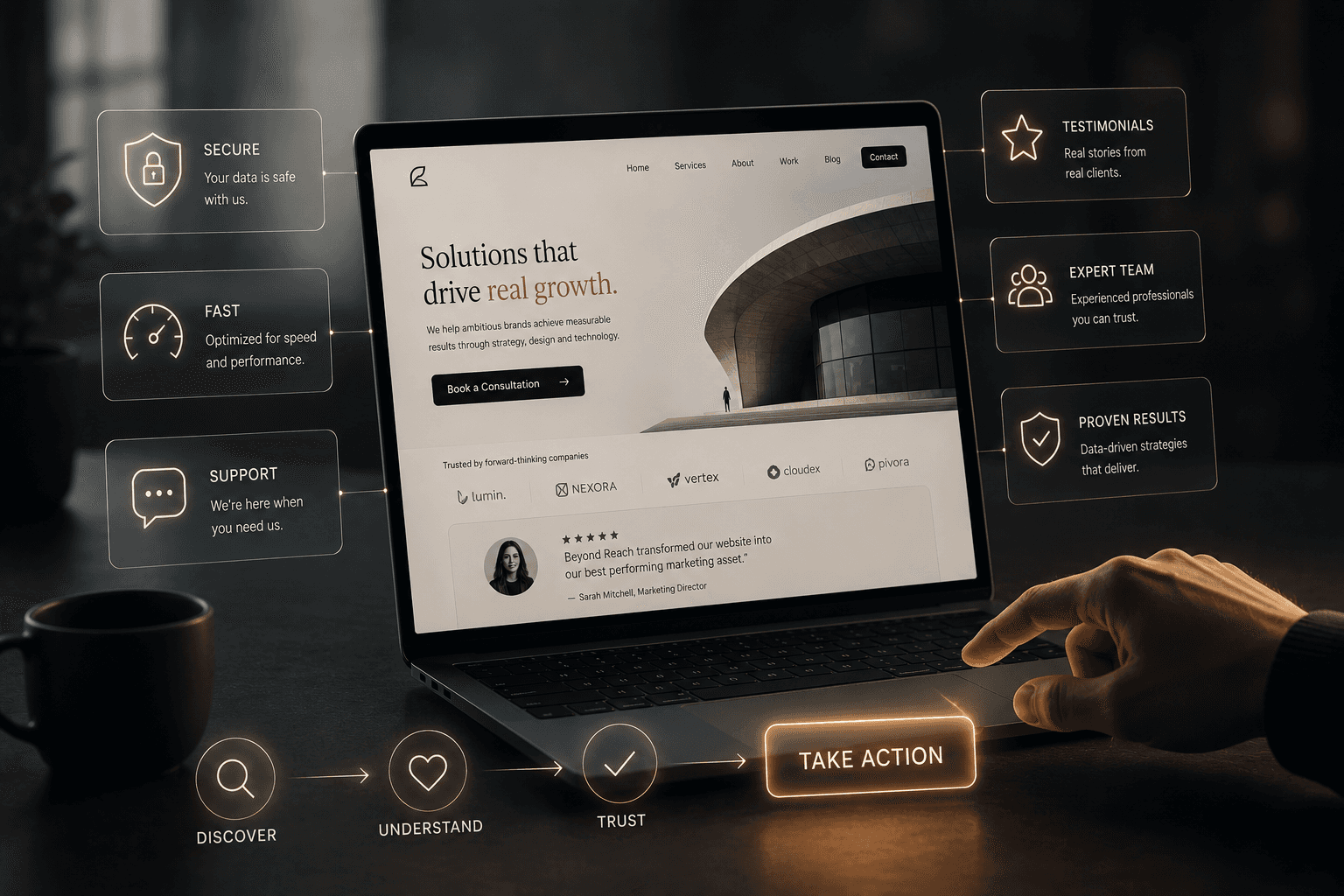
Small design decisions have a significant psychological impact:

  • Consistent branding

  • Professional imagery

  • Client testimonials

  • Fast loading speeds

  • Secure browsing

  • Clean layouts

  • Clear contact information

Together, these elements reassure visitors that they're dealing with a credible business.


Simplicity Encourages Action

Every additional decision increases mental effort.

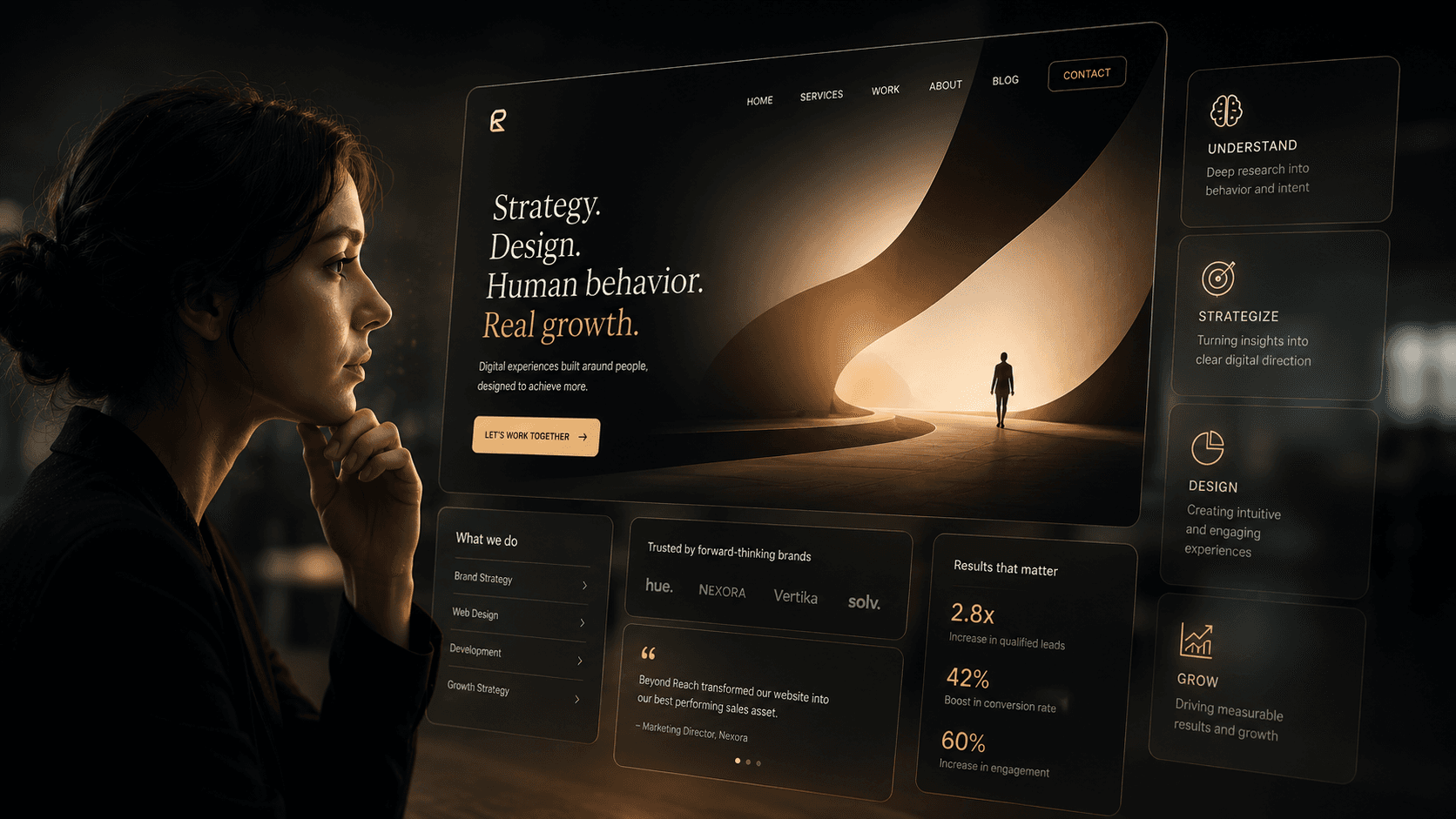
That's why the highest-performing websites focus attention on one clear objective at a time. Whether it's booking a consultation, requesting a proposal, or exploring services, every page should gently guide users toward a logical next step.

The easier the experience feels, the more likely visitors are to convert.

Emotion Influences Every Decision

People remember how a website makes them feel more than what it says.

Thoughtful typography, purposeful imagery, meaningful motion, balanced spacing, and consistent branding all work together to create emotional confidence. These subtle details influence perception long before visitors consciously evaluate your business.

Design isn't decoration—it's communication.

Psychology Meets Strategy

Beautiful interfaces alone don't generate growth.

The most effective websites combine user psychology, strategic messaging, performance optimization, and intuitive design to create experiences that inspire confidence and encourage action.

Businesses that understand human behavior don't just attract more visitors—they build stronger relationships and convert more opportunities.

Final Thoughts

Every click, scroll, and interaction is shaped by psychology. When businesses understand how people think, trust, and make decisions, they can create digital experiences that feel effortless and deliver measurable results.

At Beyond Reach, we believe exceptional websites aren't built around trends—they're built around people. By combining strategy, psychology, and thoughtful design, we create digital experiences that help ambitious businesses earn trust, generate qualified leads, and achieve sustainable growth.


More blogs

The Psychology Behind High Converting Websites

The Psychology Behind High Converting Websites

‹ The Anatomy of a High Performing Homepage

Why Most Websites Don't Generate Leads ›

Behind every successful website is a deep understanding of human psychology. While businesses often focus on aesthetics and technology, the websites that consistently generate leads and sales are designed around how people think, feel, and make decisions. By combining psychology with strategy and design, businesses can create digital experiences that naturally build trust and encourage action.

Great Websites Start With Human Behavior

People don't interact with websites logically—they interact emotionally first. Before reading your content or exploring your services, visitors instantly judge credibility based on appearance, clarity, and ease of use. These first impressions determine whether they'll stay or leave.

The most successful digital experiences aren't built around trends—they're built around people.


Clarity Reduces Uncertainty

Visitors shouldn't have to guess what your business does.

When messaging is vague or overloaded with information, users experience decision fatigue and quickly lose interest. High-converting websites remove uncertainty by presenting a clear value proposition, simple navigation, and focused calls-to-action.

When visitors understand your value immediately, they're far more likely to continue exploring.

Trust Is Built Before a Conversation Begins

Trust isn't created after someone contacts your business—it begins the moment they land on your website.

Small design decisions have a significant psychological impact:

  • Consistent branding

  • Professional imagery

  • Client testimonials

  • Fast loading speeds

  • Secure browsing

  • Clean layouts

  • Clear contact information

Together, these elements reassure visitors that they're dealing with a credible business.


Simplicity Encourages Action

Every additional decision increases mental effort.

That's why the highest-performing websites focus attention on one clear objective at a time. Whether it's booking a consultation, requesting a proposal, or exploring services, every page should gently guide users toward a logical next step.

The easier the experience feels, the more likely visitors are to convert.

Emotion Influences Every Decision

People remember how a website makes them feel more than what it says.

Thoughtful typography, purposeful imagery, meaningful motion, balanced spacing, and consistent branding all work together to create emotional confidence. These subtle details influence perception long before visitors consciously evaluate your business.

Design isn't decoration—it's communication.

Psychology Meets Strategy

Beautiful interfaces alone don't generate growth.

The most effective websites combine user psychology, strategic messaging, performance optimization, and intuitive design to create experiences that inspire confidence and encourage action.

Businesses that understand human behavior don't just attract more visitors—they build stronger relationships and convert more opportunities.

Final Thoughts

Every click, scroll, and interaction is shaped by psychology. When businesses understand how people think, trust, and make decisions, they can create digital experiences that feel effortless and deliver measurable results.

At Beyond Reach, we believe exceptional websites aren't built around trends—they're built around people. By combining strategy, psychology, and thoughtful design, we create digital experiences that help ambitious businesses earn trust, generate qualified leads, and achieve sustainable growth.

More blogs

The Psychology Behind High Converting Websites

The Psychology Behind High Converting Websites

‹ The Anatomy of a High Performing Homepage

Why Most Websites Don't Generate Leads ›

Behind every successful website is a deep understanding of human psychology. While businesses often focus on aesthetics and technology, the websites that consistently generate leads and sales are designed around how people think, feel, and make decisions. By combining psychology with strategy and design, businesses can create digital experiences that naturally build trust and encourage action.

Great Websites Start With Human Behavior

People don't interact with websites logically—they interact emotionally first. Before reading your content or exploring your services, visitors instantly judge credibility based on appearance, clarity, and ease of use. These first impressions determine whether they'll stay or leave.

The most successful digital experiences aren't built around trends—they're built around people.


Clarity Reduces Uncertainty

Visitors shouldn't have to guess what your business does.

When messaging is vague or overloaded with information, users experience decision fatigue and quickly lose interest. High-converting websites remove uncertainty by presenting a clear value proposition, simple navigation, and focused calls-to-action.

When visitors understand your value immediately, they're far more likely to continue exploring.

Trust Is Built Before a Conversation Begins

Trust isn't created after someone contacts your business—it begins the moment they land on your website.

Small design decisions have a significant psychological impact:

  • Consistent branding

  • Professional imagery

  • Client testimonials

  • Fast loading speeds

  • Secure browsing

  • Clean layouts

  • Clear contact information

Together, these elements reassure visitors that they're dealing with a credible business.


Simplicity Encourages Action

Every additional decision increases mental effort.

That's why the highest-performing websites focus attention on one clear objective at a time. Whether it's booking a consultation, requesting a proposal, or exploring services, every page should gently guide users toward a logical next step.

The easier the experience feels, the more likely visitors are to convert.

Emotion Influences Every Decision

People remember how a website makes them feel more than what it says.

Thoughtful typography, purposeful imagery, meaningful motion, balanced spacing, and consistent branding all work together to create emotional confidence. These subtle details influence perception long before visitors consciously evaluate your business.

Design isn't decoration—it's communication.

Psychology Meets Strategy

Beautiful interfaces alone don't generate growth.

The most effective websites combine user psychology, strategic messaging, performance optimization, and intuitive design to create experiences that inspire confidence and encourage action.

Businesses that understand human behavior don't just attract more visitors—they build stronger relationships and convert more opportunities.

Final Thoughts

Every click, scroll, and interaction is shaped by psychology. When businesses understand how people think, trust, and make decisions, they can create digital experiences that feel effortless and deliver measurable results.

At Beyond Reach, we believe exceptional websites aren't built around trends—they're built around people. By combining strategy, psychology, and thoughtful design, we create digital experiences that help ambitious businesses earn trust, generate qualified leads, and achieve sustainable growth.

More blogs

We transform brands.
Your success is next.

Start your project now by booking a one on one consultation with our expert.

Team working in an office watching at a presentation

We transform brands.
Your success is next.

Start your project now by booking a one on one consultation with our expert.

Team working in an office watching at a presentation

We transform brands.
Your success is next.

Start your project now by booking a one on one consultation with our expert.

Team working in an office watching at a presentation
We are currently based in Los Angeles.

Timezone (UTC-8)

Stay in the Loop

Stay informed about our latest news, updates by subscribing to our newsletter.

We respect your inbox. No spam, just valuable updates.

© 2026 Beyond Reach
We are currently based in Los Angeles.

Timezone (UTC-8)

Stay in the Loop

Stay informed about our latest news, updates by subscribing to our newsletter.

We respect your inbox. No spam, just valuable updates.

© 2026 Beyond Reach
We are currently based in Los Angeles.

Timezone (UTC-8)

Stay in the Loop

Stay informed about our latest news, updates by subscribing to our newsletter.

We respect your inbox. No spam, just valuable updates.

© 2026 Beyond Reach